The digital marketing world is facing a major shift. Third-party cookies once the backbone of online advertising and audience tracking are disappearing. With Google phasing them out from Chrome, marketers can no longer rely on the same tracking methods that shaped digital campaigns for over two decades.
So, what does this mean for your marketing strategy? And more importantly what can you do now to stay ahead of the curve?
Understanding the Death of Cookies
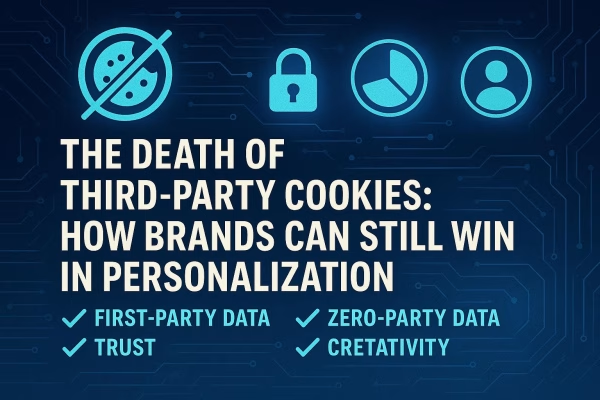
Third-party cookies have long been used to track users across websites, allowing advertisers to deliver personalized ads and measure campaign performance. However, growing privacy concerns and regulations like GDPR and CCPA have pushed browsers and regulators to prioritize user consent and data protection.
Apple’s Safari and Mozilla’s Firefox already blocked them years ago and now that Google Chrome, the world’s most popular browser, is following suit, the end of the cookie era is official.
Why It Matters for Marketers
Without third-party cookies, marketers face several challenges:
- Loss of audience tracking: Cross-site user behavior data becomes limited.
- Reduced personalization: Ad targeting and remarketing will be less precise.
- Data fragmentation: Understanding the customer journey across multiple channels becomes harder.
In short, digital marketers will have to rethink how they collect, analyze, and activate user data.
The Shift Toward First-Party Data
The most important takeaway?
First-party data is your new best friend.
First-party data comes directly from your audience through website interactions, email sign-ups, surveys, CRM systems, and loyalty programs. This data is consented, reliable, and privacy-compliant.
Actionable steps:
- Build strong customer relationships through transparent data collection.
- Encourage sign-ups via gated content, newsletters, and exclusive offers.
- Use analytics tools that focus on first-party data insights (like Google Analytics 4).
Explore Privacy-Friendly Alternatives
As cookies fade, new technologies are emerging:
- Google’s Privacy Sandbox: A framework for targeted ads without tracking individual users.
- Contextual advertising: Placing ads based on content relevance instead of user profiles.
- Server-side tracking: A more secure way to capture event data directly from your site.
These alternatives allow marketers to maintain ad performance while respecting user privacy.
Focus on Trust and Transparency
Today’s users are more privacy-aware than ever. Brands that prioritize transparency and data ethics will stand out. Clearly communicate how you collect and use data, and give users easy control over their privacy settings.
Building trust isn’t just a compliance issue it’s a competitive advantage.
Rethink Your Marketing Strategy
The end of cookies doesn’t mean the end of data-driven marketing it means smarter marketing.
Marketers should:
- Invest in customer data platforms (CDPs) to unify data from multiple sources.
- Rely more on owned channels like email, SMS, and apps.
- Use AI-driven insights to predict user behavior based on first-party data.
This shift is your opportunity to create more meaningful, consent-based relationships with your audience.
Conclusion
The death of cookies marks the beginning of a more privacy-conscious era in digital marketing. Those who adapt early by embracing first-party data, leveraging privacy-safe tools, and prioritizing trust will not only survive but thrive.
Digital marketing is evolving. The question isn’t whether cookies are dying it’s how ready you are for what comes next.
Discover more from Wits Technologies Ltd
Subscribe to get the latest posts sent to your email.